
















Introduction<\/h2>
Artificial Intelligence (AI) has become one of the most influential technologies shaping the modern world. From smart applications and automation systems to data-driven business decisions, AI is transforming industries across the globe. As organizations increasingly rely on intelligent systems and machine learning solutions, the demand for professionals trained in artificial intelligence continues to grow rapidly.
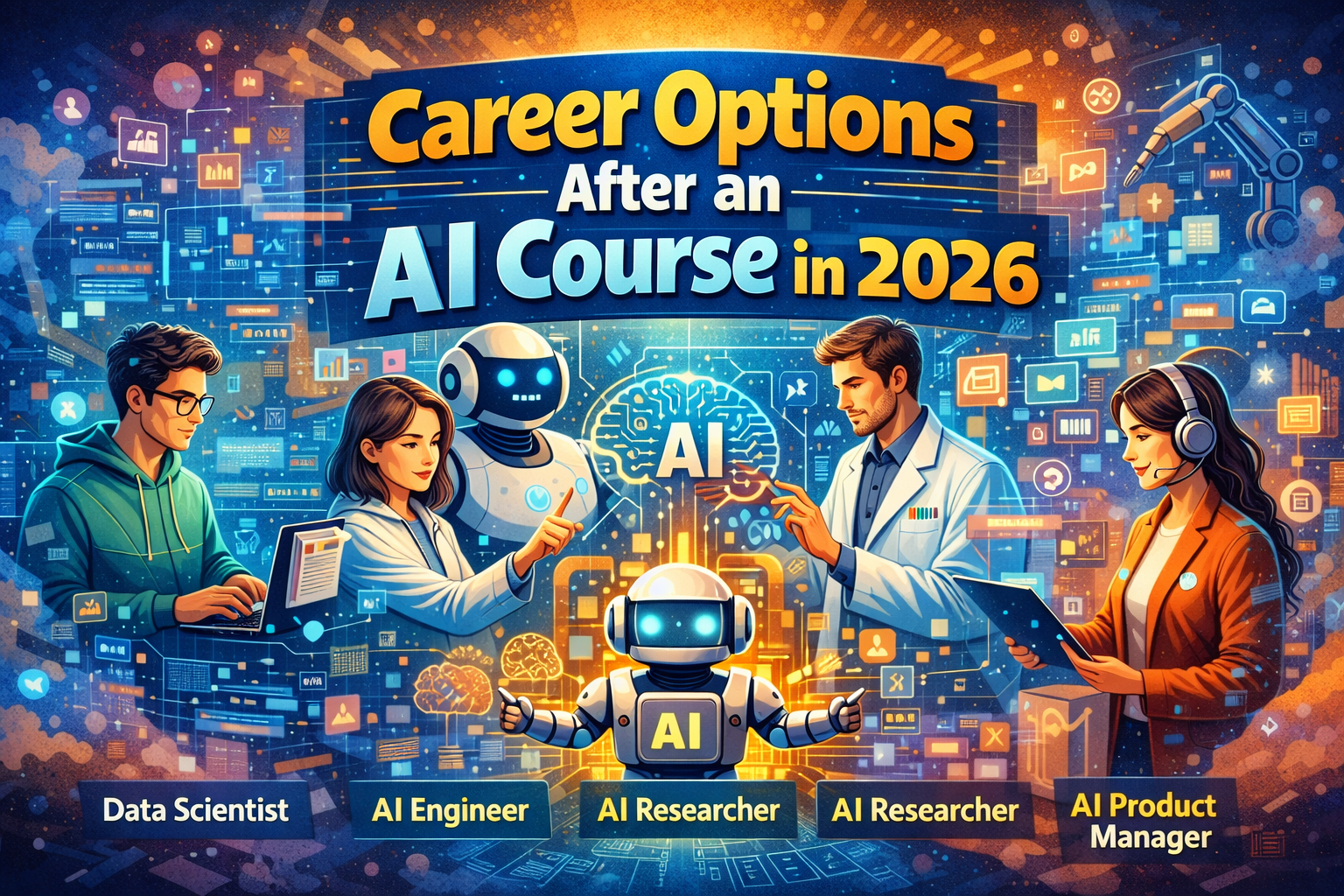
Students who complete an AI course gain valuable technical knowledge and analytical skills that open the door to numerous career opportunities. In 2026, AI-related roles are expected to expand even further as businesses adopt advanced technologies to improve efficiency and innovation.
Completing an AI course not only helps students understand how intelligent systems work but also prepares them to build, analyze, and manage AI-powered solutions. With the right training and practical experience, learners can explore diverse career paths across industries such as technology, healthcare, finance, marketing, and cybersecurity.
The Growing Demand for AI Professionals
The global demand for artificial intelligence professionals has been increasing steadily as organizations integrate AI into their operations. Businesses use AI to automate tasks, analyze large amounts of data, improve customer experiences, and optimize decision-making processes.
As a result, companies require skilled professionals who can design AI models, analyze data patterns, and develop intelligent applications. Students who complete AI training programs become valuable assets to organizations seeking to implement innovative technological solutions.
In 2026, industries are expected to rely even more heavily on AI technologies. This shift will create numerous employment opportunities for individuals with expertise in machine learning, data analysis, and intelligent automation.
AI Engineer
One of the most popular career options after completing an AI course is becoming an AI engineer. AI engineers design and develop intelligent systems that can perform complex tasks such as speech recognition, predictive analysis, and automated decision-making.
These professionals work with machine learning algorithms, programming languages, and data models to create AI applications. AI engineers are responsible for building systems that learn from data and improve performance over time.
This role requires strong technical skills and a deep understanding of machine learning techniques, making it a rewarding career for students interested in advanced technology development.
Data Analyst
Data analysis is another career path that students can pursue after completing an AI course. Data analysts examine large datasets to identify patterns, trends, and insights that help organizations make informed decisions.
AI technologies enhance the ability to analyze complex data more efficiently. Professionals in this field use data visualization tools, statistical methods, and machine learning techniques to interpret information and provide actionable recommendations.
Data analysts are needed in various industries, including finance, healthcare, marketing, and e-commerce, making this career path highly versatile and in demand.
Machine Learning Specialist
Machine learning specialists focus on developing algorithms that enable computers to learn from data without explicit programming. This role involves creating predictive models, improving system accuracy, and training machine learning algorithms to solve specific problems.
Machine learning is a key component of artificial intelligence, and specialists in this field contribute to advancements in areas such as recommendation systems, natural language processing, and image recognition.
Students who pursue this career path often work in technology companies, research organizations, or innovative startups that focus on developing intelligent applications.
AI Product Manager
Another exciting career option after an AI course is becoming an AI product manager. These professionals combine technical knowledge with business strategy to develop AI-powered products and services.
AI product managers oversee the planning, development, and implementation of artificial intelligence solutions within organizations. They work closely with engineers, designers, and business teams to ensure that AI products meet user needs and market demands.
This role is ideal for individuals who have both technical understanding and strong management or communication skills.
AI Researcher
Students interested in exploring advanced technological concepts may choose to pursue careers as AI researchers. Researchers focus on studying new algorithms, developing innovative AI models, and improving the efficiency of intelligent systems.
AI researchers often work in universities, research laboratories, and technology companies that invest in developing new technologies. Their work contributes to scientific advancements and the future development of artificial intelligence applications.
This career path is particularly suitable for individuals who enjoy experimentation, academic research, and solving complex technological challenges.
AI Consultant
AI consultants help organizations understand how artificial intelligence can be integrated into their operations. They analyze business processes, recommend AI solutions, and guide companies in implementing intelligent technologies.
Professionals in this role work with different industries to identify opportunities where AI can improve productivity, automate tasks, or enhance customer experiences. AI consultants combine technical expertise with business analysis to deliver strategic solutions.
This career path is ideal for individuals who enjoy problem-solving and working with organizations to implement innovative technologies.
Freelance and Entrepreneurial Opportunities
Artificial intelligence skills also open doors to freelance and entrepreneurial opportunities. Professionals with AI expertise can work independently on projects such as developing AI applications, analyzing data, or creating automation tools.
Freelancers may collaborate with businesses around the world to provide specialized AI services. Some individuals also choose to start their own technology companies or develop innovative AI-based products.
The flexibility offered by freelance work allows professionals to explore creative ideas and build independent careers in the technology sector.
Frequently Asked Questions (FAQ)<\/h2>
What jobs can I get after completing an AI course?
Students can pursue roles such as AI engineer, data analyst, machine learning specialist, AI product manager, AI consultant, or AI researcher.
Is artificial intelligence a good career choice in 2026?
Yes, artificial intelligence is expected to remain one of the fastest-growing fields, offering numerous career opportunities across various industries.
Do AI professionals need programming skills?
Yes, programming languages such as Python are commonly used in AI development and are essential for building machine learning models and applications.
Can non-technical students pursue careers in AI?
Yes, many AI courses provide foundational training that allows students from different backgrounds to enter the field and develop relevant skills.
Are AI careers high-paying?
AI-related roles are among the highest-paying technology careers because organizations highly value professionals who can develop and manage intelligent systems.
Conclusion<\/h2>
Artificial intelligence continues to shape the future of industries and career opportunities worldwide. Students who complete AI courses gain valuable skills that allow them to work with advanced technologies and contribute to innovative solutions.
Career paths such as AI engineer, data analyst, machine learning specialist, AI product manager, and AI consultant offer exciting opportunities for individuals interested in technology-driven professions. In addition, freelance and entrepreneurial possibilities allow AI professionals to explore independent career paths.
As the demand for intelligent systems continues to grow in 2026 and beyond, students who invest in AI education can build successful and rewarding careers in this dynamic and rapidly evolving field.


.webp)










.png)



 Book A Free Demo
  18001020418
 Apply Now





 Please select course category