














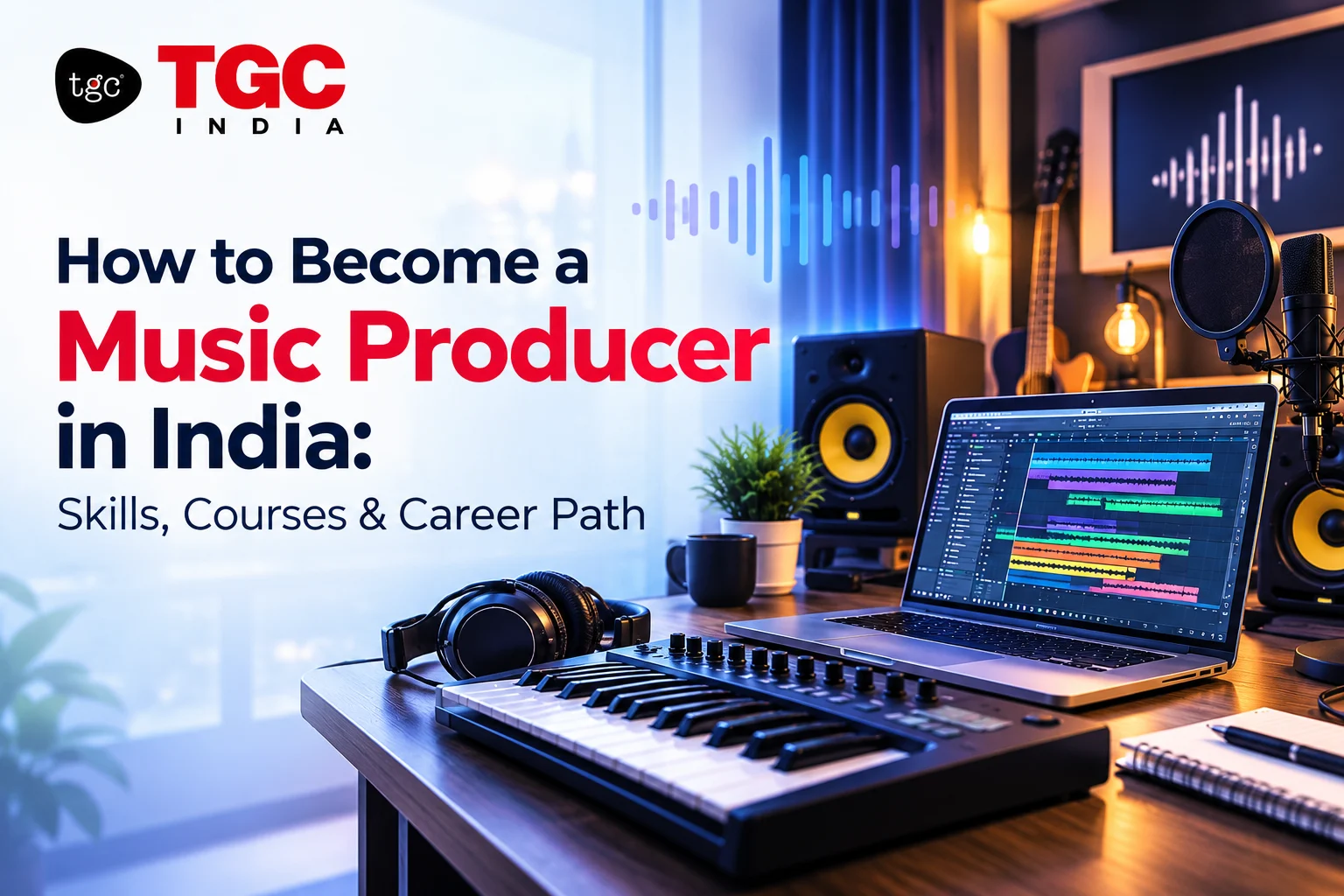
How to Become a Music Producer in India: Skills, Courses & Career Path
Last updated on Oct 03, 2026


Introduction
India's music industry is no longer just about playback singers and film scores. Independent artists, YouTube music channels, OTT background scores, gaming audio, podcasts, and live-streamed gigs have created more paid work for music producers than ever before. If beatmaking, mixing, and arranging songs excites you more than your 9-to-5 ever will, here's a realistic roadmap to becoming a professional music producer in India.
Who is a music producer, really?
A music producer isn't just someone who presses play on a laptop. The role covers composing and arranging music, recording and editing vocals or instruments, programming beats, mixing multiple tracks into a cohesive sound, and mastering the final file for release. Some producers specialize in a genre (hip-hop, EDM, Bollywood, indie); others work across films, ad jingles, and corporate content.
Step 1: Build your music fundamentals
You don't need a formal music degree, but you do need working knowledge of rhythm, scales, chords, and song structure. Spend time training your ear — learn to identify what makes a bassline sit well with a kick drum, or why a chord progression feels "sad" versus "uplifting." This foundation makes every DAW tool you learn afterward far more intuitive.
Step 2: Learn a Digital Audio Workstation (DAW)
A DAW is the software where all production happens. The major players in India are:
- FL Studio – popular for beat-making, hip-hop, and EDM
- Ableton Live – strong for live performance and electronic production
- Logic Pro – a favourite among Mac users for film scoring and composition
- Pro Tools – the industry standard for recording studios and post-production
- Cubase – widely used for MIDI programming and orchestral work
Most working producers eventually get comfortable with at least two of these, since studios and clients don't all use the same software.
Step 3: Get structured, hands-on training
Self-teaching from YouTube can only take you so far — it rarely covers signal flow, studio etiquette, mixing theory, or how to actually finish and release a track professionally. A structured course with real studio time, access to instructors from the industry, and project-based learning compresses years of trial and error into months.
TGC India's Advanced Diploma in Music Production and Sound Engineering covers recording, mixing, mastering, and DAW training in a practical, project-driven format at its South Delhi studio, with instructor-led online batches also available. For those who want to go deep on one tool, TGC also runs focused courses in Ableton, Logic Pro, FL Studio, and Pro Tools.
Step 4: Mix, master, and finish tracks — don't just start them
A huge number of beginner producers have folders full of half-finished projects and nothing actually released. The skill that separates hobbyists from professionals is finishing: taking a track through recording, arrangement, mixing, and mastering to a polished, releasable file. Practice this discipline early, even on simple tracks.
Step 5: Build a portfolio and start networking
Once you can produce a clean, professional-sounding track, build a portfolio — a SoundCloud or YouTube channel, a few original productions, and if possible, a collaboration or two with vocalists or other producers. Reach out to independent artists who need a producer, local event organizers, or small ad agencies that need jingles. Internships at studios are also a fast way to learn real-world workflows and make industry contacts.
Career paths after music production training
- Independent/freelance producer – producing for artists, labels, or your own releases
- Studio sound engineer – recording and mixing in a professional studio
- Film and OTT background scorer – composing for web series, films, and documentaries
- Game audio and sound design – scoring and designing sound for games and apps
- Live sound and touring – working with artists on stage sound and monitoring
- Jingle and ad music production – creating short-form music for brands
FAQs
Is a music degree required to become a music producer in India?
No. Most successful producers are trained through diploma courses, certifications, or self-study combined with mentorship — not a university music degree.
Which DAW should a beginner start with?
FL Studio and Ableton Live are the most beginner-friendly for electronic and beat-based production; Logic Pro and Cubase suit those leaning toward composition and scoring.
How long does it take to become job-ready?
With focused, structured training, most students reach a professional skill level in 6 months to 1 year, though continuous practice is what truly builds mastery.
What is the earning potential for music producers in India?
It varies widely by specialization and reputation — freelance beginners may earn modestly per track, while established producers working with labels, films, or OTT platforms can earn significantly more per project.
Ready to get hands-on with professional studio gear and real mixing projects? Explore TGC India's full range of Music Production and Sound Engineering courses in Delhi and online.
🎯 Recommended Career Program
Music Production & Sound Engineering Course in Delhi
Professional training in Cubase, Ableton, Logic Pro, beat making, synthesizers, mixing & mastering.
Next Batches: Starting Every Week (Fast Track & Weekend Available)
Recently Added Articles

.webp)


.webp)










.png)


 Book A Free Demo





 Please select course category