
















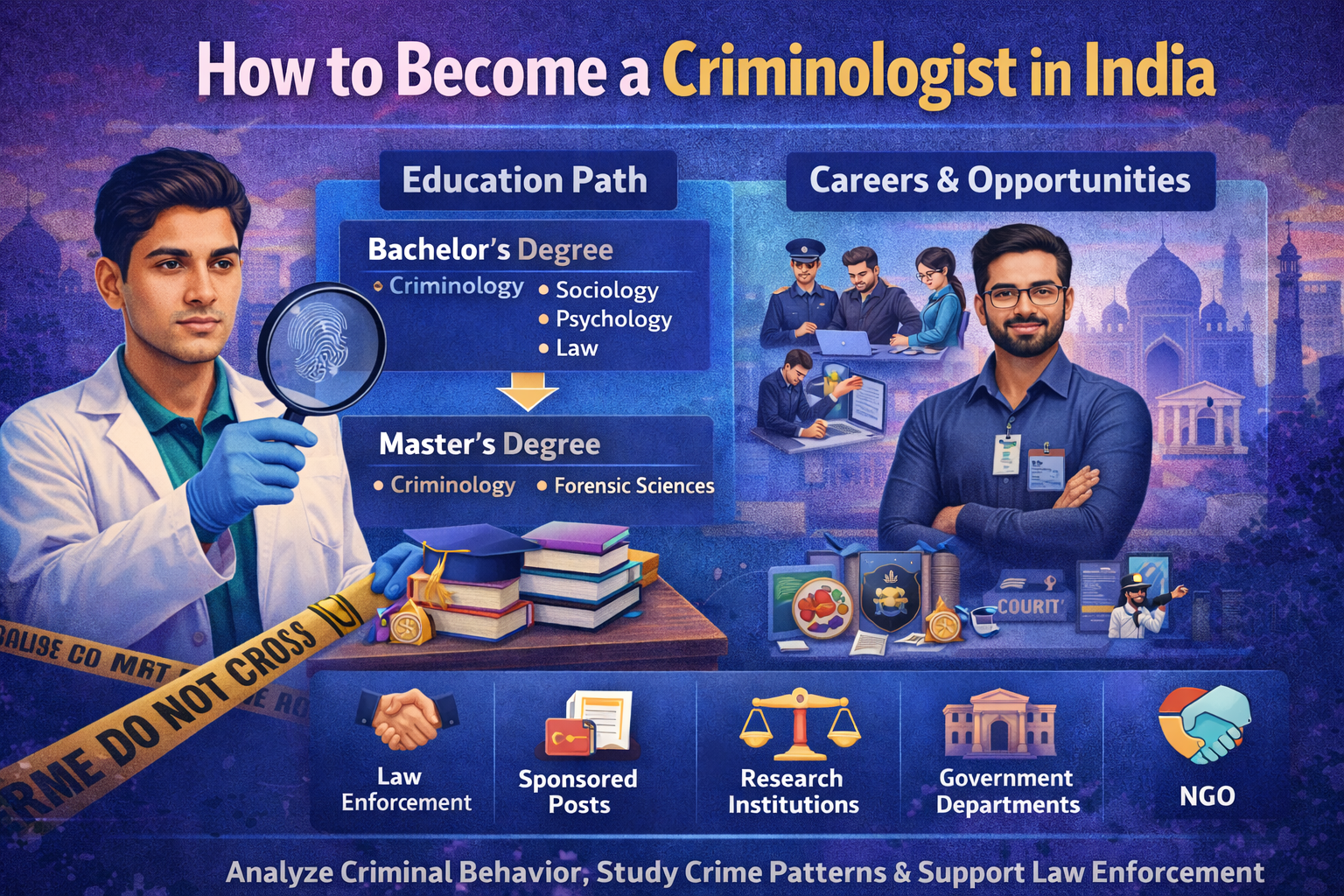
How to Become a Criminologist in India<\/h2>
Becoming a criminologist in India opens up a world of opportunities in understanding crime and its impact on society. We need to explore the educational pathways, essential skills, and practical experiences that shape a successful career in this field. As we navigate through this journey, we'll uncover the various roles criminologists play and how they contribute to the justice system. So, what’s the first step we should take to commence on this path?
Key Takeaways
- Obtain a bachelor's degree in criminology or a related field to start your career in criminology.
- Pursue advanced degrees for deeper knowledge and specialization in areas like forensic psychology or cybercrime.
- Gain practical experience through internships with law enforcement agencies or volunteering with NGOs focused on crime prevention.
- Develop essential skills such as analytical thinking, research proficiency, and strong communication for effective crime analysis.
- Network with professionals through mentorship programs and industry events to enhance career opportunities in criminology.
What Does a Criminologist Do in India?
When we think about what a criminologist does in India, we realize that their role goes beyond just studying crime. Criminologists analyze crime patterns, helping law enforcement develop strategies to prevent future offenses. Their responsibilities include conducting research, gathering evidence, and interpreting data to shed light on criminal behavior. We collaborate with police departments, legal professionals, and community organizations to create effective crime prevention programs. Additionally, criminologists educate the public about crime trends and societal impacts, raising awareness and fostering discussions. By understanding the root causes of crime, we contribute to building safer communities. Ultimately, our work as criminologists is essential in shaping policies and practices that address crime and enhance public safety throughout India.
Educational Pathways: Degrees and Certifications in Criminology
As we explore educational pathways for becoming a criminologist in India, we’ll look at the essential degrees and certifications required for this field. Starting with a bachelor's degree is vital, but we also have advanced degree options that can enhance our expertise. Plus, various certification programs can further our credentials and career prospects.
Bachelor's Degree Requirements
A solid educational foundation is essential for anyone aspiring to become a criminologist in India. To kickstart our journey, we need to enroll in bachelor's programs offered by reputable degree institutions. These programs typically cover key subjects such as criminal psychology, forensic science, and sociology, providing us with a thorough understanding of crime and its implications. Most institutions require us to have completed our higher secondary education, and some may even prefer a background in social sciences. While pursuing our degree, we should engage in internships or volunteer opportunities that enhance our practical skills. By selecting the right bachelor's program, we set ourselves up for success in the field of criminology. Let’s take that important first step together!
Advanced Degrees Options
Completing a bachelor's degree in criminology opens the door to various advanced degree options that can further enhance our expertise and career prospects. We can pursue a master's degree in criminology, which deepens our understanding of criminal behavior and justice systems. Additionally, doctoral programs offer us the chance to engage in advanced research, contributing to the field with original insights.
Many of these programs emphasize interdisciplinary approaches, allowing us to explore connections between criminology, psychology, sociology, and law. This broad perspective not only enriches our studies but also prepares us for diverse career paths, from academia to policy-making. Ultimately, these advanced degrees equip us with the necessary tools to make a meaningful impact in the domain of criminology.
Certification Programs Available
Numerous certification programs are available for those of us looking to enhance our credentials in criminology. These programs provide valuable knowledge and skills that can set us apart in the field. To start, we should research the certification requirements for each program, as they can vary greatly. Many institutions offer flexible online courses, making it easier for us to study at our own pace while balancing work and personal commitments. Topics often covered include criminal psychology, forensic science, and crime scene investigation. By completing these certifications, we not only deepen our understanding but also increase our employability. Investing in these programs can be an essential step towards achieving our career goals in criminology. Let's explore our options and take the leap!
Key Skills for Success in Criminology
While pursuing a career in criminology, we must recognize that certain key skills can markedly enhance our effectiveness in the field. Developing these skills helps us excel in crime analysis and contribute meaningfully to society. Here are some essential skills we should cultivate:
- Analytical Thinking: We need to evaluate complex data and draw logical conclusions.
- Communication Skills: Clear communication is vital for presenting findings and collaborating with others.
- Research Proficiency: Mastering various research methods allows us to gather and analyze relevant information effectively.
- Attention to Detail: A keen eye for detail helps us spot patterns or anomalies in crime data.
How to Gain Practical Experience in Criminology
To gain practical experience in criminology, we should consider internships and fieldwork opportunities that offer hands-on learning. Networking with professionals in the field can also open doors to valuable insights and job prospects. By engaging with both experiences, we can enhance our understanding and skills in criminology.
Internships and Fieldwork Opportunities
Gaining practical experience through internships and fieldwork is essential for anyone aspiring to be a criminologist in India. These experiences not only enhance our understanding but also help us build vital skills. Here are some ways to find internship opportunities and gain fieldwork experience:
- Collaborate with local police departments for hands-on exposure to law enforcement.
- Apply for research assistant positions with universities focusing on criminology.
- Volunteer with NGOs that work on crime prevention and rehabilitation programs.
- Participate in community outreach projects to understand societal impacts on crime.
Networking With Professionals
Building connections with professionals in the criminology field is essential for gaining practical experience and insights. By actively engaging in mentorship programs, we can learn from experienced criminologists who can guide us through our career paths. These programs often provide valuable opportunities to shadow professionals, enhancing our understanding of real-world applications.
We should also focus on fostering professional relationships by attending industry conferences, workshops, and seminars. These events not only allow us to meet established experts but also help us stay updated on the latest trends in criminology. Networking through social media platforms like LinkedIn can further extend our reach. Together, by building a robust network, we can access resources and opportunities that greatly impact our careers in criminology.
Why Research Skills Matter for Criminologists
Although many might think that criminology revolves around crime scene investigations and criminal profiling, research skills are at the core of our work as criminologists. These skills enable us to analyze data effectively and apply investigative techniques to understand crime patterns.
Here are a few reasons why research skills matter:
- Data analysis helps us interpret crime statistics and trends.
- Critical thinking allows us to evaluate the validity of sources and information.
- Methodological knowledge guarantees we design effective studies and surveys.
- Reporting findings is essential for communicating our insights to law enforcement and policymakers.
Popular Specializations in Criminology
Research skills not only enhance our understanding of crime patterns but also guide us in selecting our areas of focus within criminology. Among the popular specializations, we often find ourselves drawn to fields like forensic psychology and criminal justice. These areas not only enrich our expertise but also allow us to contribute meaningfully to society.
| Specialization | Description |
|---|---|
| Forensic Psychology | Focuses on the psychological aspects of crime and legal processes. |
| Criminal Justice | Encompasses the study of law enforcement, legal systems, and corrections. |
| Cybercrime | Investigates crimes committed through digital platforms. |
| Juvenile Delinquency | Examines the causes and prevention of youth crime. |
Career Opportunities for Criminologists in India
As we explore the career opportunities for criminologists in India, we discover a diverse range of paths that can lead to fulfilling and impactful roles. Criminologists can greatly contribute to various sectors, including:
- Law Enforcement: Working closely with police to improve crime analysis and investigation processes.
- Forensic Psychology: Evaluating offenders and providing insights into criminal behavior.
- Victim Advocacy: Supporting victims through legal processes and rehabilitation programs.
- Policy Development: Influencing social justice initiatives and crime prevention strategies.
With the rise of cybercrime and the need for effective intervention with youth offenders, the demand for skilled criminologists continues to grow, making it an exciting field to pursue.
Job Market Tips for Criminologists
Maneuvering the job market as a criminologist can feel overwhelming, but we can simplify the process with a few strategic tips. Understanding current industry demands is essential for boosting our job prospects. Here’s a quick reference table to keep in mind:
| Focus Area | Tips |
|---|---|
| Skills Development | Enhance analytical and research skills. |
| Certifications | Obtain relevant certifications to stand out. |
| Internship Experience | Gain practical experience through internships. |
Networking Opportunities for Aspiring Criminologists
As aspiring criminologists, we understand that building connections in our field is essential for success. Joining professional associations, attending networking events, and participating in online communities can open doors to valuable opportunities. Let’s explore how these networking avenues can enhance our careers and expand our knowledge.
Professional Associations and Groups
While pursuing a career in criminology, we can greatly benefit from joining professional associations and groups that foster networking opportunities. Engaging with criminology associations and professional groups opens doors to various advantages that can enhance our careers.
Here are some key networking benefits we gain through membership:
- Career development: Access to resources and mentorship can guide our professional growth.
- Collaborative projects: Opportunities to work with experts on research and initiatives.
- Research funding: Many associations offer grants that support our studies and projects.
- Industry partnerships: Connections with organizations can lead to internships and job placements.
Networking Events and Conferences
Joining professional associations and groups is just the beginning of our networking journey in criminology. Attending networking events and conferences allows us to engage with seasoned professionals and fellow aspiring criminologists. These gatherings offer invaluable opportunities for professional development, enhancing our skills and knowledge in the field. By participating in workshops and seminars, we can stay updated on the latest trends and research. Furthermore, we can establish essential industry connections that may lead to internships, job placements, or collaborations. Building these relationships not only boosts our career prospects but also enriches our understanding of criminology. Let's make the most of these events and actively seek out opportunities to learn and grow together in our criminology careers.
Online Communities and Forums
Many aspiring criminologists are turning to online communities and forums as essential networking opportunities. These platforms offer us a chance to connect, share knowledge, and seek advice from experienced professionals. Engaging in online discussions not only enhances our understanding but also fosters community support. Here are some benefits we can gain:
- Expert Insights: Learn from seasoned criminologists and their real-world experiences.
- Resource Sharing: Access valuable materials, articles, and research relevant to our field.
- Mentorship Opportunities: Find mentors who can guide us in our career journeys.
- Peer Networking: Build relationships with fellow students and professionals who share our interests.
Future Trends in Criminology in India
As we look ahead, the future of criminology in India promises to be shaped by advancements in technology and evolving societal challenges. We’ll see a significant rise in data analysis, enabling us to make informed decisions that drive effective crime prevention strategies. Technological advancements, such as forensic innovations, will enhance our investigative capabilities, while interdisciplinary approaches will foster collaboration across fields. Community engagement will play an essential role in addressing local issues, ensuring that solutions are tailored to specific needs. Additionally, international collaboration will enrich our understanding of global crime trends and their policy implications. Together, we can embrace these trends, shaping a more effective and responsive criminology landscape in India.
Frequently Asked Questions
What Salary Can a Criminologist Expect in India?
Criminologists in India can expect salary ranges from ₹3 to ₹10 lakhs annually, depending on experience and expertise. With growing job prospects in law enforcement and research, we’re optimistic about our earning potential in this field.
Are Internships Mandatory for Criminology Students in India?
Internships aren’t mandatory for criminology students in India, but they’re highly beneficial. We gain practical experience, enhance our skills, and build connections in the field, making us more competitive in the job market.
How Long Does It Take to Become a Criminologist?
It typically takes us three to five years to complete criminology education and acquire the necessary skills for criminologist roles. This timeframe includes obtaining a degree and possibly pursuing further specialization in the field.
Can I Pursue Criminology Online in India?
Yes, we can pursue criminology online in India! Many universities offer online courses and distance learning programs, making it easier for us to study while balancing other commitments. Let’s explore these opportunities together!
What Are the Ethical Considerations in Criminology?
In criminology, we face ethical dilemmas surrounding research integrity. We must guarantee our studies respect privacy, avoid bias, and contribute positively to society, balancing our pursuit of knowledge with the responsibilities we hold.
Conclusion
To sum up, becoming a criminologist in India is an exciting journey filled with opportunities for growth and impact. By following the right educational pathways, honing essential skills, and gaining practical experience, we can position ourselves for success in this dynamic field. Let’s not forget the importance of networking and staying updated on future trends. Together, we can contribute to a safer society and make a meaningful difference through our work in criminology.
🎯 Recommended Career Program
Graphic Design Course in Delhi
Master Photoshop, Illustrator, InDesign, CorelDraw & Gen AI with 100% placement support.
Next Batches: Starting Every Week (Fast Track & Weekend Available)
Recently Added Articles

.webp)


.webp)










.png)



 Book A Free Demo
  18001020418
 Apply Now





 Please select course category