
















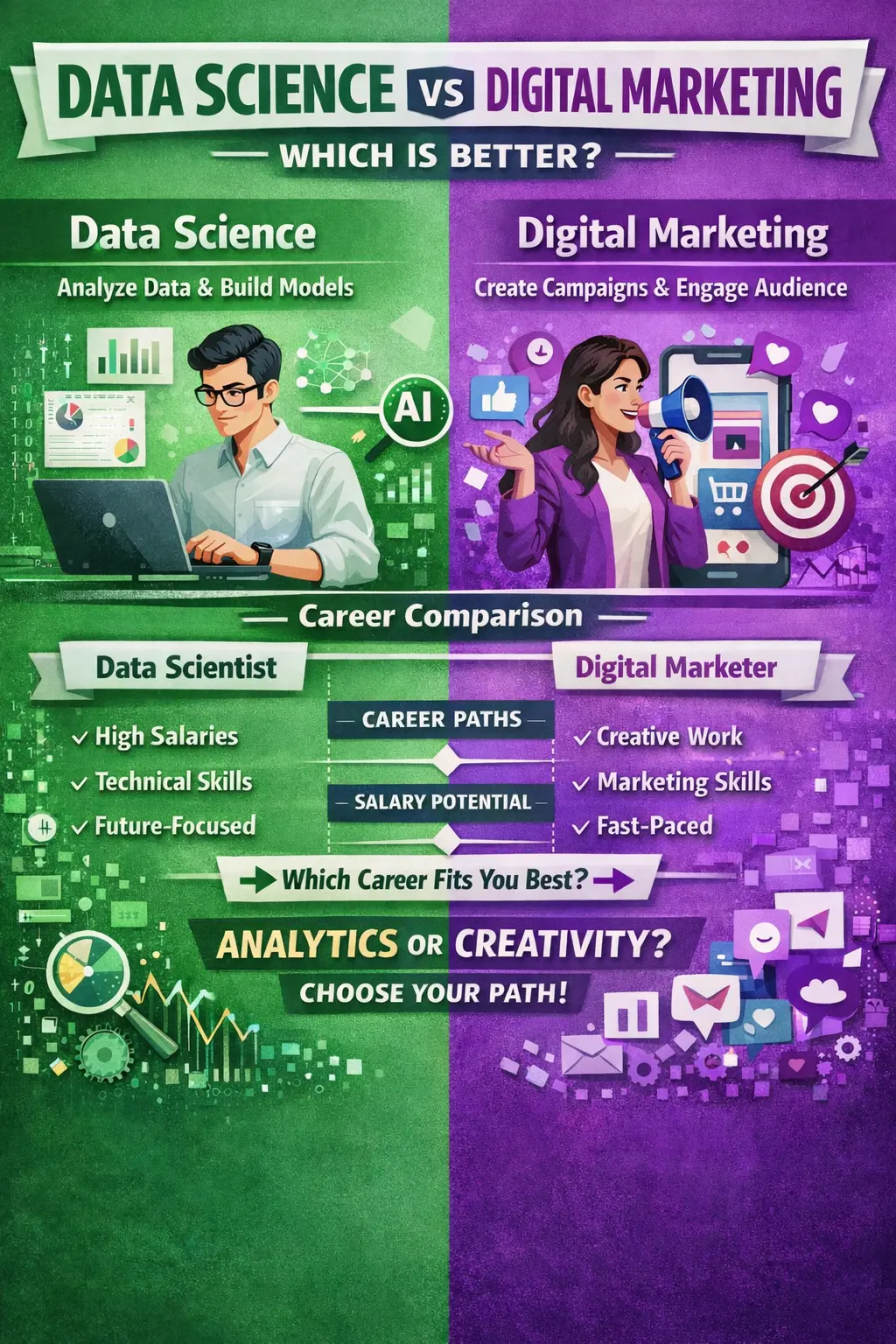
Data Science VS Digital Marketing: Which is Better?<\/h2>Introduction to the Modern Digital Careers
Choosing a career today is no longer as simple as picking a degree and sticking with it for life. The digital revolution has completely transformed how businesses operate, creating new roles that didn’t even exist a decade ago. Among these, Data Science and Digital Marketing stand out as two of the most powerful, in-demand, and future-oriented career options. Both fields promise growth, attractive salaries, and global opportunities—but they are very different in nature.This comparison becomes especially important for students, recent graduates, and professionals seeking to transition into new careers. One path is deeply rooted in data, logic, and technology, while the other thrives on creativity, communication, and consumer psychology. So the real question isn’t just which is better, but which is better for you.
Why This Comparison Matters Today
Businesses today are driven by two major forces: data-driven decision-making and digital visibility. Companies want to understand their customers deeply, predict trends, and reduce risks using data. At the same time, they must compete for attention in a crowded online marketplace. This is where data scientists and digital marketers become indispensable.If you choose the wrong path without understanding your strengths and interests, you may feel stuck or burnt out later. Comparing these careers properly helps you align your skills, personality, and long-term goals with the right profession.
Rising Demand for Tech-Driven Roles
The demand for professionals who can analyse data or market products online has skyrocketed across various industries, including IT, healthcare, finance, e-commerce, education, and entertainment. Start -ups and multinational companies alike are investing heavily in analytics and digital campaigns. This growing demand ensures long-term job security for both data science and digital marketing professionals.
What is Data Science?
Definition and Core Concept
Data Science is the process of collecting, analysing, interpreting, and transforming large volumes of data into actionable insights. In simple terms, data science helps organisations answer questions like: What happened? Why did it happen? What will happen next? It blends mathematics, statistics, computer science, and domain knowledge to solve real-world problems.Imagine running a business without knowing customer behaviour, sales trends, or future demand—it would be like driving Blindfolded. Data science removes that blindfold.
Key Responsibilities of a Data Scientist
A data scientist works with structured and unstructured data to uncover hidden patterns. Their daily tasks may include data cleaning, exploratory data analysis, building machine learning models, testing predictions, and presenting insights to decision-makers. They often work closely with engineers, product managers, and business leaders.This role requires not only technical skills but also the ability to translate complex data into clear, actionable insights that non-technical teams can easily understand.
Tools and Technologies Used in Data Science
Data scientists rely on tools such as Python, R, SQL, Excel, Tableau, Power BI, TensorFlow, and cloud platforms like AWS or Azure. These tools help them process massive datasets efficiently and build intelligent systems. While the learning curve is steep, mastery of these tools opens doors to high-paying roles worldwide.
What is Digital Marketing?
Definition and Scope
Digital Marketing refers to promoting products, services, or brands through online channels such as search engines, social media, websites, email, and mobile apps. Unlike traditional marketing, digital marketing allows businesses to reach the right audience at the right time with measurable results.It’s a fast-paced field that constantly evolves with new platforms, algorithms, and consumer behaviours.
Key Responsibilities of a Digital Marketer
A digital marketer plans and executes online campaigns to increase brand awareness, traffic, leads, and sales. Their responsibilities may include SEO optimisation, paid advertising, social media management, content creation, email marketing, and performance analysis.The goal is simple: attract, engage, and convert users into loyal customers.
Tools and Platforms Used in Digital Marketing
Digital marketers use tools like Google Analytics, Google Ads, Meta Ads, SEO tools, email automation software, and content management systems. These tools help track user behaviour, campaign performance, and return on investment.
Educational Background and Skills Required
Skills Needed for Data Science
Data science requires a strong foundation in mathematics, statistics, and programming. Logical thinking, problem-solving ability, and attention to detail are crucial. While degrees in engineering or science help, many professionals enter the field through certifications and Self-learning.
Skills Needed for Digital Marketing
Digital marketing values creativity, communication, and strategic thinking. Skills such as writing, design sense, analytical thinking, and understanding customer psychology are essential. Technical skills are useful but not mandatory at the Beginning.
Learning Curve and Difficulty Level
Is Data Science Hard to Learn?
Data science is challenging, especially for beginners. Concepts like machine learning algorithms and statistical models take time to grasp. However, with consistent practice and real-world projects, it becomes manageable and highly rewarding.
Is Digital Marketing Easy to Start?
Digital marketing has a lower entry barrier. Beginners can start learning basic concepts quickly. However, staying relevant requires constant learning as platforms and trends change rapidly.
Career Opportunities and Job Roles
Career Paths in Data Science
Data science offers roles such as Data Analyst, Data Scientist, Machine Learning Engineer, and AI Specialist. These roles are critical in strategic decision-making.
Career Paths in Digital Marketing
Digital marketing offers diverse roles, including SEO Expert, PPC Specialist, Content Marketer, Social Media Manager, and Growth Marketer.
Salary Comparison
Data Science Salary Trends
Data science professionals generally earn higher salaries due to the technical complexity and business impact of their work. Senior roles command premium compensation.
Digital Marketing Salary Trends
Digital marketing salaries vary widely based on specialisation and performance. Experts in paid ads and growth marketing can earn exceptionally well.
Work Environment and Lifestyle
Day in the Life of a Data Scientist
Data scientists often work in structured environments, focusing on analysis and problem-solving. It’s more analytical and less customer-facing.
Day in the Life of a Digital Marketer
Digital marketers enjoy dynamic workdays involving creativity, collaboration, and experimentation. No two days feel the same.
Creativity vs Analytics
Analytical Nature of Data Science
Data science suits those who love numbers, logic, and structured thinking.
Creative Side of Digital Marketing
Digital marketing is ideal for people who enjoy storytelling, visuals, and influencing audiences.
Freelancing and Business Opportunities
Freelancing in Data Science
Freelancing is possible but usually requires advanced expertise and experience.
Conclusion
Data Science VS Digital Marketing is not about which career is superior—it’s about which aligns with your skills, interests, and long-term goals. Data science offers depth, technical growth, and high salaries, while digital marketing offers flexibility, creativity, and faster entry.Choose wisely, invest in learning, and success will follow.
🎯 Recommended Career Program
Data Science Course in Delhi
Comprehensive Python, Machine Learning, AI algorithms and Data Science training at TGC India.
Next Batches: Starting Every Week (Fast Track & Weekend Available)
Recently Added Articles

.webp)


.webp)










.png)



 Book A Free Demo
  18001020418
 Apply Now





 Please select course category