
















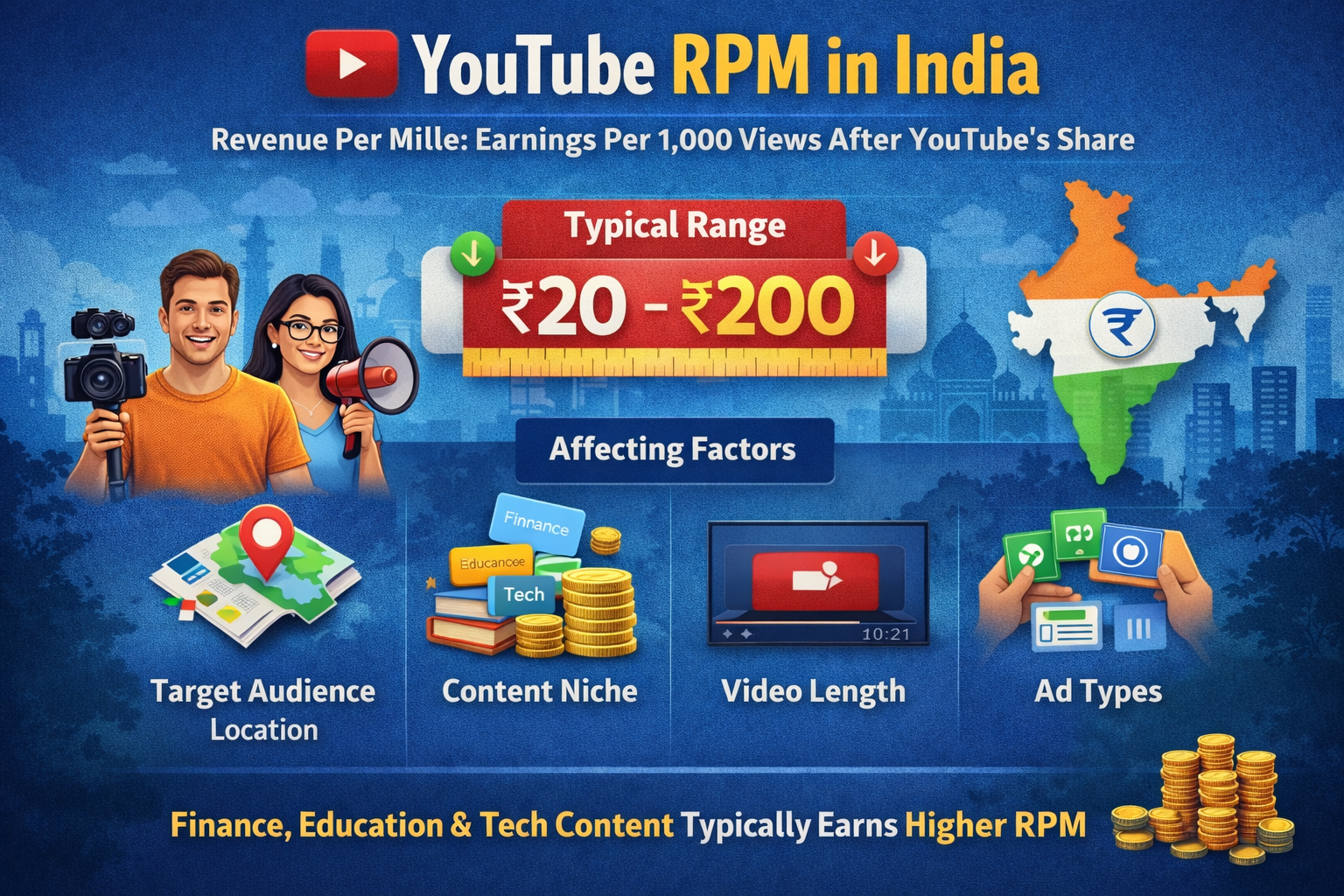
Youtube Rpm in India<\/h2>
As content creators traversing the YouTube landscape in India, we’ve all noticed how vital RPM has become in shaping our revenue strategies. With varying rates depending on our niche, it’s essential to grasp the factors influencing our earnings. Understanding these dynamics can reveal new opportunities for growth. But what specific strategies can we employ to enhance our RPM? Let's explore the key elements that could make a significant difference.
Key Takeaways
- YouTube RPM in India varies by content type, with tech reviews earning ₹150-₹300 and gaming content achieving ₹200-₹400 per 1,000 views.
- Audience demographics significantly impact RPM, as age and location influence ad value and viewer engagement.
- Regularly calculating RPM helps creators track growth and refine monetization strategies for better earnings.
- Engaging with audiences and optimizing content can increase relevance and potentially boost RPM figures.
- Understanding platform algorithms is essential for improving content visibility and maximizing monetization opportunities.
Understanding RPM: What Is YouTube RPM in India?
YouTube RPM, or Revenue Per Mille, is an essential metric for content creators in India looking to monetize their channels effectively. Understanding RPM significance helps us gauge how much revenue we generate per 1,000 views. This metric allows us to evaluate our channel’s performance and make informed decisions about content and advertising strategies. When we conduct an RPM comparison across different channels or genres, we can identify trends and opportunities for growth. By analyzing these figures, we can better understand our audience's engagement and tailor our content accordingly. Ultimately, grasping RPM empowers us to enhance our monetization efforts, ensuring we’re maximizing our potential earnings while engaging our viewers meaningfully. Let’s dive deeper into how we can leverage this metric!
What RPM Rates Can Indian Creators Expect?
What RPM rates can we expect as Indian creators in the ever-evolving landscape of digital content? While it varies across different niches, we can generally anticipate some encouraging figures. Here’s a quick breakdown of potential RPM rates based on popular Indian niches:
- Tech Reviews: Often see RPM rates between ₹150 to ₹300, thanks to high advertiser interest.
- Lifestyle Vlogs: These typically range from ₹100 to ₹250, appealing to a broad audience.
- Gaming Content: RPM can soar from ₹200 to ₹400, given the growing gaming community.
Ultimately, understanding these rates helps us optimize our creator earnings and target the right audience. By focusing on these niches, we can maximize our potential while maneuvering through the YouTube landscape.
Top Factors Affecting YouTube RPM for Indian Creators
When we talk about YouTube RPM for Indian creators, we can't ignore how audience demographics and the diversity of content types play essential roles. Understanding who our viewers are and what types of videos resonate with them can greatly impact our earnings. Let's explore how these factors shape our RPM and what we can do to optimize them.
Audience Demographics Impact
As we explore the world of YouTube RPM in India, understanding audience demographics becomes essential for creators looking to maximize their earnings. By focusing on our audience's interests and enhancing viewer engagement, we can considerably influence our RPM. Here are three key factors to reflect upon:
- Age Groups: Different age demographics respond to various content types, impacting ad rates and engagement.
- Geographical Location: Audiences from urban areas might attract higher-paying advertisers compared to rural viewers.
- Content Preferences: Knowing what topics resonate with our viewers can drive higher engagement, leading to better monetization opportunities.
Content Type Diversity
Understanding the diversity of content types we create can greatly influence our YouTube RPM in India. By embracing content variety, we not only cater to different audience interests but also enhance our chances of attracting advertisers. Exploring various niches allows us to tap into unique markets, which can markedly boost our revenue potential. For instance, we might create tutorials, reviews, or vlogs, each appealing to distinct viewers. This niche exploration helps us identify what resonates most with our audience and allows us to create tailored content that drives engagement. As we diversify our offerings, we position ourselves better within the competitive landscape, making our channels more attractive to advertisers, ultimately improving our RPM.
Calculating Your YouTube RPM: A Step-By-Step Guide
Now that we’ve explored the factors affecting RPM, it’s time to calculate our own YouTube RPM. We’ll start by understanding the RPM metrics, gathering our data, and then calculating the total revenue. Let’s break it down step-by-step so we can see how it all adds up.
Understanding RPM Metrics
YouTube RPM, or Revenue Per Mille, is an essential metric that helps us gauge the earnings we make per 1,000 views. Understanding RPM analytics allows us to fine-tune our monetization strategies for better income. Here’s how we can calculate our RPM effectively:
- Identify total earnings: This includes ad revenue, sponsorships, and merchandise sales.
- Track total views: Gather data from all our videos to get an accurate count.
- Use the RPM formula: Divide total earnings by total views, then multiply by 1,000.
Gathering Your Data
To effectively calculate our YouTube RPM, gathering accurate data is our first step. We need to identify reliable data sources, like YouTube Analytics, which provides insights into our channel’s performance. By diving into these analytics tools, we can track key metrics, such as views, watch time, and estimated revenue. This information helps us understand our content's effectiveness and audience engagement.
Let’s also consider additional data sources, like Google AdSense, to get a clearer picture of our earnings from ads. By compiling data from these platforms, we can guarantee our RPM calculations are precise. With accurate data in hand, we’re ready to move forward and analyze our total revenue effectively in the next steps of our journey.
Calculating Total Revenue
As we plunge into calculating our total revenue, it’s essential to understand the components that contribute to our YouTube RPM. This revenue breakdown helps us make accurate earnings estimations and track our growth effectively. Here’s a simple three-step process to guide us:
- Identify Total Views: Count all views on our monetized videos.
- Calculate Ad Revenue: Multiply the total views by our average CPM (cost per thousand impressions).
- Factor in Other Income: Include earnings from memberships, Super Chats, and merchandise.
Strategies to Increase Your YouTube RPM in India
While many creators in India seek to boost their YouTube RPM, implementing effective strategies can make a significant difference. First, we should focus on content optimization. By enhancing our video titles, descriptions, and thumbnails, we can attract more viewers. Next, audience engagement is essential; responding to comments and asking for feedback helps build a loyal community.
Niche targeting allows us to hone in on specific audiences, increasing our relevance and potential ad revenue. Additionally, forming advertising partnerships can elevate our RPM by connecting us with brands that align with our content. By combining these strategies, we can foster growth and maximize our YouTube RPM, ultimately leading to greater success on the platform.
How Advertisers Impact YouTube RPM
Understanding how advertisers impact YouTube RPM is essential for creators looking to maximize their revenue. Advertisers' preferences and market competition play significant roles in shaping our earnings. Here’s how they influence our RPM:
- Target Audience: Advertisers often seek specific demographics. If our content aligns with their target audience, we can secure higher RPMs.
- Ad Formats: The type of ads (banners, skippable, non-skippable) affects our RPM. More engaging ad formats typically yield better revenue.
- Seasonal Trends: Advertisers adjust their budgets based on market competition. During peak seasons, like holidays, we may see a surge in ad spending, boosting our RPM.
YouTube RPM vs. Other Monetization Avenues
When we compare YouTube RPM to other monetization avenues, it's clear that each platform has its unique strengths and challenges. YouTube monetization primarily relies on ad revenue, but creator earnings can vary greatly based on audience engagement and niche. In our ad revenue comparison, we often see that platforms like TikTok or Instagram offer different revenue models, such as brand partnerships and sponsored posts, which can enhance revenue diversification for creators. While content monetization on YouTube can be lucrative, it’s essential to explore other digital marketing strategies. By leveraging various platforms, we can maximize our earnings and reach more audiences. Ultimately, balancing YouTube RPM with alternative methods can lead to a more sustainable income for creators.
Emerging Trends Shaping YouTube RPM in India
As we plunge into the emerging trends shaping YouTube RPM in India, it's evident that the landscape is rapidly evolving. We're witnessing shifts in content consumption that directly impact how creators engage with their audience. Here are three key trends we should keep an eye on:
- Niche Markets: More creators are targeting specific viewer preferences, leading to tailored content that resonates deeply with audiences.
- Advertising Trends: Brands are increasingly focusing on innovative video formats, enhancing their connection with viewers through engaging ads.
- Platform Algorithms: Understanding these algorithms is critical; they dictate visibility and monetization strategies, influencing creators' RPM considerably.
Frequently Asked Questions
How Does Youtube RPM Differ From CPM in India?
YouTube RPM calculation focuses on revenue per thousand views after platform cuts, while CPM comparison looks at gross earnings before deductions. Understanding both helps us grasp how our earnings fluctuate based on viewer engagement and ad performance.
Can RPM Fluctuate Monthly for Indian Creators?
Yes, RPM can fluctuate monthly for Indian creators. These fluctuations often impact our monthly earnings based on viewer engagement and ad performance. Staying aware of trends helps us adapt our strategies effectively.
What Niches Have the Highest RPM in India?
Health niches and finance channels often have the highest RPM in India. Meanwhile, tech reviews, cooking tutorials, travel vlogs, and fashion blogs can also perform well, but they typically yield lower RPM compared to those top categories.
How Does Audience Geography Affect RPM Rates?
Audience demographics greatly impact RPM rates; different geographic targeting yields varying revenue potential. By understanding our audience's location, we can tailor content and maximize earnings, ensuring we reach the right viewers for better monetization.
Are There Any Penalties for Low RPM on Youtube?
There aren't direct penalties for low RPM, but it can affect our monetization strategies. We should focus on improving content quality and audience engagement to boost RPM and enhance our overall earnings potential.
Conclusion
In summary, understanding and optimizing our YouTube RPM in India is essential for maximizing our earnings as creators. By recognizing the factors that influence RPM and adapting our content strategies accordingly, we can tap into the potential of this platform. As trends continue to evolve, staying informed and responsive will help us enhance our revenue streams. Let’s embrace these insights and work together to make the most of our YouTube journey!
🎯 Recommended Career Program
Graphic Design Course in Delhi
Master Photoshop, Illustrator, InDesign, CorelDraw & Gen AI with 100% placement support.
Next Batches: Starting Every Week (Fast Track & Weekend Available)
Recently Added Articles

.webp)


.webp)










.png)



 Book A Free Demo
  18001020418
 Apply Now





 Please select course category