















Introduction to BBA Course Details After 12th
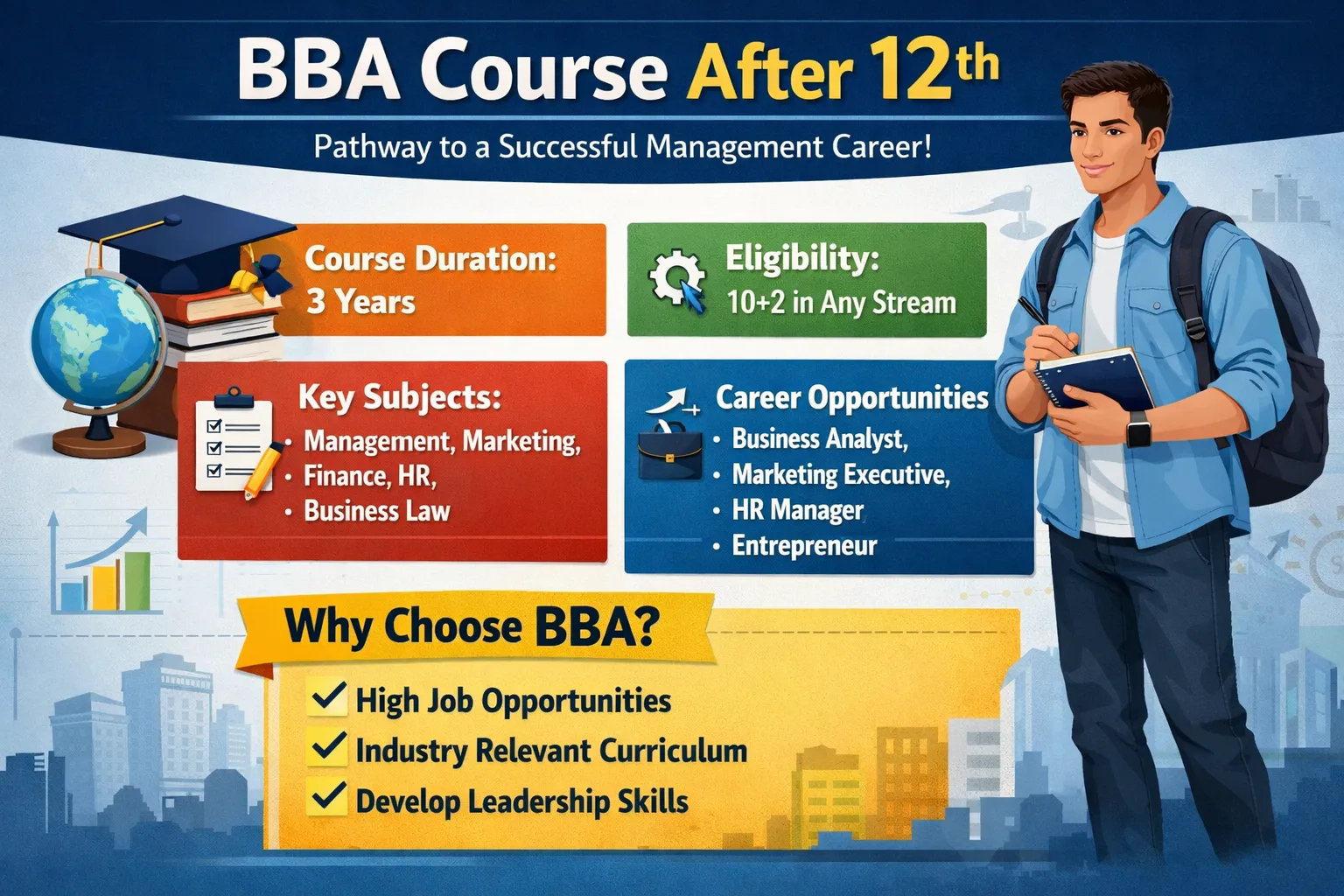
Choosing the right undergraduate program after completing school is one of the most important academic decisions a student makes. Among the most popular management programs in India and abroad, the Bachelor of Business Administration stands out as a career-oriented option. Understanding BBA course details after 12th helps students make an informed choice about their future in business and management. This three-year undergraduate program is designed to provide foundational knowledge in management, finance, marketing, human resources, and entrepreneurship. Students from Commerce, Science, and Arts backgrounds can pursue this degree and build a strong base for corporate careers or higher studies, such as an MBA.
What is BBA, and why is it Popular After 12th?
When exploring BBA course details after 12th, it is important to understand the structure and purpose of the program. BBA is a professional degree divided into six semesters over three years. The curriculum combines theoretical concepts with practical exposure, including case studies, presentations, internships, and live projects. The course prepares students to understand how businesses operate in real-world environments. The popularity of BBA has increased significantly because industries today demand skilled professionals who possess managerial thinking and leadership abilities from an early stage in their careers.
Eligibility Criteria and Admission Process
One of the key aspects of the BBA course after 12th is eligibility. Students must have completed their 12th grade from a recognized board, usually with a minimum aggregate percentage ranging between 45% and 60%, depending on the institution. Admission procedures vary across colleges. Some universities offer direct admission based on merit, while others conduct entrance examinations followed by personal interviews or group discussions. Understanding these BBA course details after 12th allows students to prepare strategically, especially if entrance exams are required. Early preparation can increase the chances of securing admission in reputed colleges.
Subjects and Curriculum in BBA
A detailed look at the BBA course details after 12th reveals a well-structured syllabus designed to develop managerial competence. The program includes subjects such as Principles of Management, Business Economics, Financial Accounting, Marketing Management, Organizational Behavior, Business Law, and Human Resource Management. Students also learn about entrepreneurship, business communication, and operations management. In the final year, many institutions allow specialization in areas such as Marketing, Finance, Human Resources, International Business, or Business Analytics. This academic framework ensures that students gain both conceptual clarity and practical business insight.
Skills Developed Through BBA
Beyond academic knowledge, the BBA course details after 12th highlight the development of essential professional skills. Students enhance their communication abilities, leadership qualities, decision-making skills, and analytical thinking. The program encourages teamwork, presentation skills, and problem-solving capabilities, all of which are crucial in the corporate world. Exposure to internships and industry projects further strengthens practical understanding. These skills not only increase employability but also prepare students for higher studies and competitive examinations.
Career Scope and Job Opportunities
When students research BBA course details after 12th, career opportunities become a major deciding factor. After completing BBA, graduates can work in sectors such as banking, marketing, finance, e-commerce, consulting, and information technology. Entry-level roles may include marketing executive, business development executive, HR coordinator, financial analyst, or operations executive. With experience, professionals can grow into managerial and leadership positions. The starting salary may vary depending on the institution and skills of the candidate, but career growth potential remains strong, especially for those who pursue additional qualifications like an MBA.
Higher Education Options After BBA
A comprehensive understanding of the BBA course details after 12th also includes knowledge about further academic opportunities. Many students opt for MBA or PGDM programs to enhance their management expertise and secure high-paying roles. Others may pursue specialized certifications in finance, digital marketing, business analytics, or entrepreneurship. Higher education significantly improves career prospects and salary potential. BBA provides the academic foundation that makes advanced management studies more accessible and easier to understand.
Advantages of Choosing BBA Immediately After 12th
Selecting BBA right after school offers a strategic advantage. By reviewing the BBA course details after 12th carefully, students can begin building management knowledge at an early stage. This early exposure gives them a competitive edge over peers who shift to management later in their academic journey. The course structure ensures a gradual yet comprehensive understanding of business operations. It also opens pathways for entrepreneurship, allowing students to start their own ventures with a solid managerial base.
Conclusion: Is BBA the Right Choice for You?
Making a well-informed decision requires a clear understanding of the BBA course details after 12th and how they align with your career aspirations. If you are interested in business strategy, leadership, corporate management, or entrepreneurship, BBA can serve as an ideal starting point. The program offers academic depth, practical exposure, diverse career opportunities, and strong potential for higher studies. By carefully evaluating colleges, specializations, and long-term goals, students can use this degree as a stepping stone toward a successful and rewarding professional journey in the business world.
🎯 Recommended Career Program
Graphic Design Course in Delhi
Master Photoshop, Illustrator, InDesign, CorelDraw & Gen AI with 100% placement support.
Next Batches: Starting Every Week (Fast Track & Weekend Available)
Recently Added Articles



.webp)


.webp)










.png)


 Book A Free Demo





 Please select course category